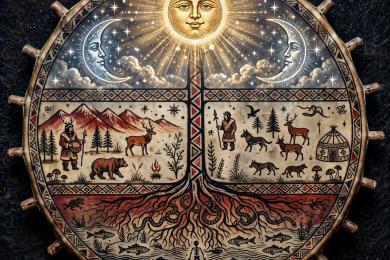


Shaman House: Bridging Ancient Eurasian Traditions and Modern Consciousness
Shamanism: Ancient Wisdom & Modern Harmony
1. Introduction to Shamanism
Shamanism is one of humanity’s oldest spiritual practices, predating organised religion. Rather than relying on rigid dogma, it functions as a living worldview centred on harmony, balance, and direct experiential connection with the cosmos and natural world.
2. Origins in Central Asia & Eurasia
The heartland of shamanic heritage lies deep within the Altay Mountains, the Siberian steppes, and the nomadic corridors of Central Asia. Across these vast landscapes, early nomadic tribes developed belief systems intimately tied to the weather, seasonal migrations, and the terrain around them.
3. The Role of the Shaman (Kam / Baksı)
In traditional Eurasian societies, the shaman—known historically as a Kam or Baksı—served as a vital mediator between the physical community and the unseen realm. They were spiritual guardians, healers, storytellers, and keepers of tribal memory who restored balance whenever harmony was disrupted.
4. The Cosmic Axis & Three Realms
Shamanic cosmology visualizes existence structured across three interconnected realms linked by a central world tree or cosmic pillar: the Upper World of celestial spirits, the Middle World of human life, and the Lower World of ancestral wisdom and foundational forces.
5. Sacred Instruments & Sound
Rhythm and sound serve as vehicles for spiritual alignment. The rhythmic beat of the Kam drum, the earthy textures of Baksı rattles, and deep throat-singing overtone techniques allow practitioners to shift perception, enter meditative states, and channel collective energy.
6. Animal Spirits & Totems
Animals are revered not as lesser beings, but as powerful guardians and teachers. Sacred totems—such as the wolf representing loyalty and guidance, the eagle symbolising higher perspective, and the horse embodying speed and spirit—offer symbolic strength and spiritual protection.
7. Rituals & Sacred Geometry
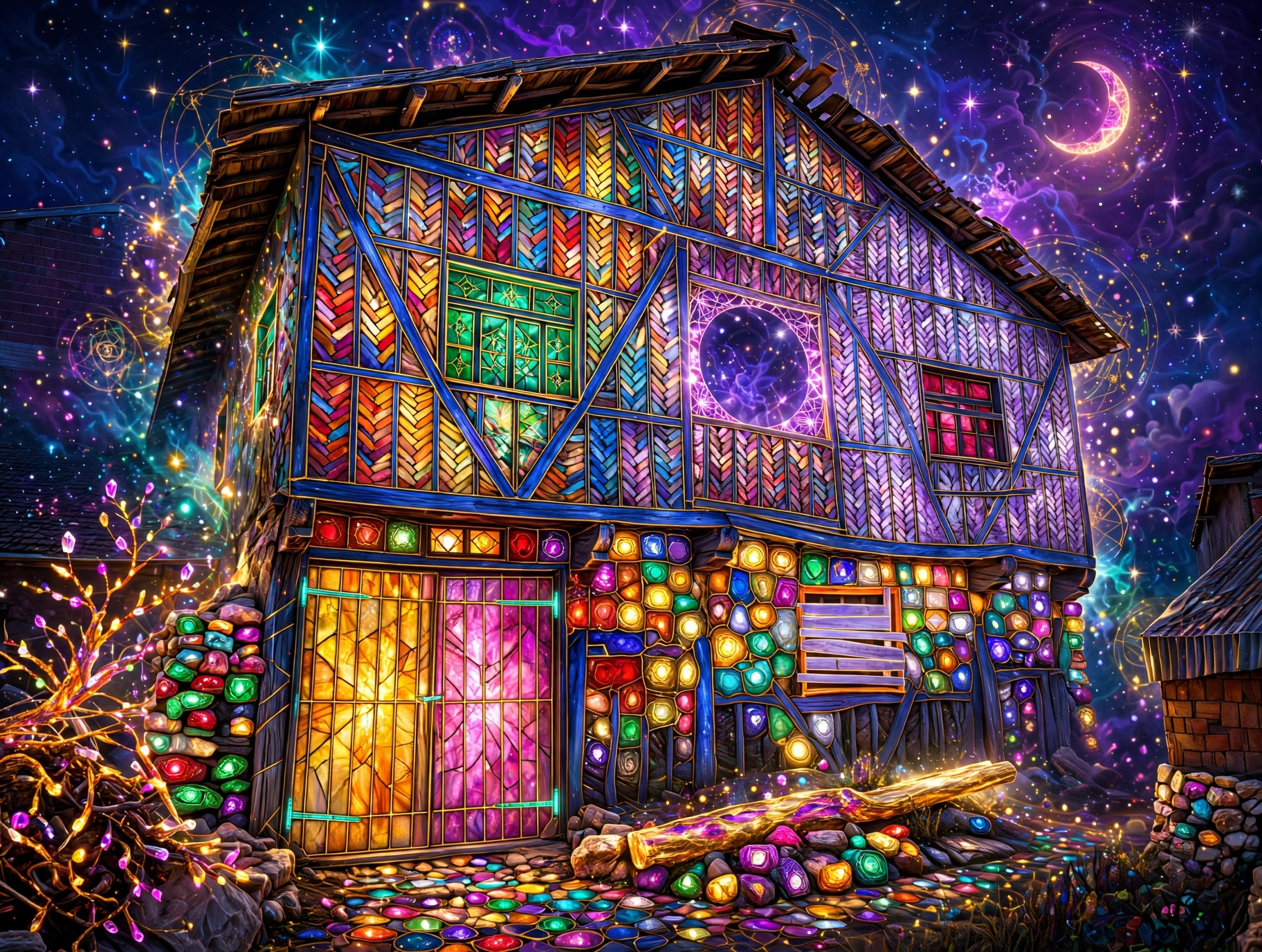
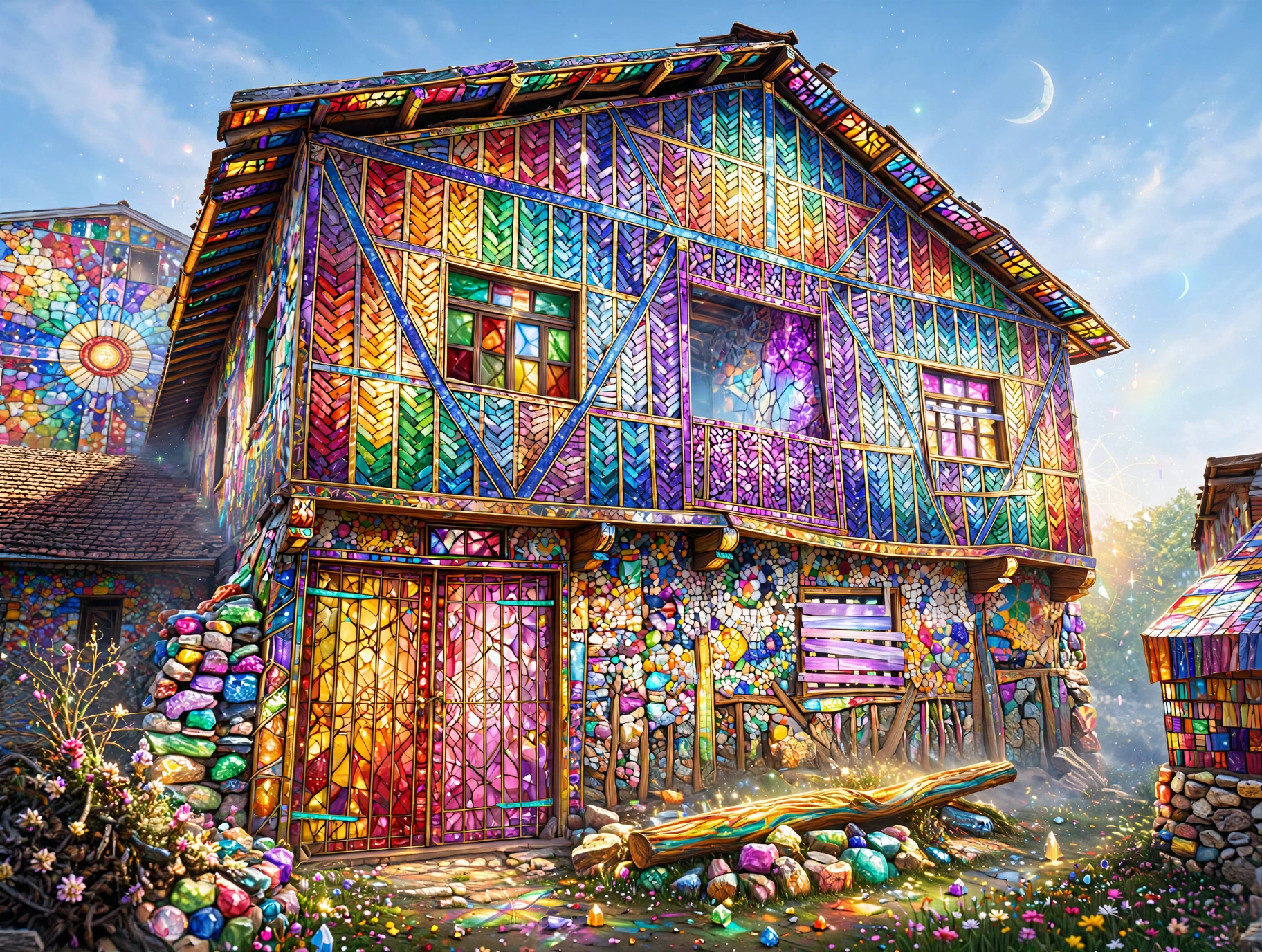
From woven textiles and stained-glass motifs to sacred architectural layouts, geometric patterns in shamanic traditions serve as visual portals. These intricate designs reflect cosmic order, channelling light and energy into physical spaces to foster harmony.
8. Nature, Animism, and Earth Connection
At the core of shamanic thought is animism: the understanding that all elements of nature—mountains, rivers, winds, and trees—possess a vital spirit. Respecting these natural forces cultivates a deep sense of stewardship and ecological mindfulness.
9. Modern Revival & Cultural Heritage
In today's fast-paced digital era, ancient shamanic philosophies are experiencing a global resurgence. Contemporary artists, musicians, and thinkers draw upon these traditions to bring grounding, mindfulness, and cultural heritage back into modern lifestyles.
10. The Shaman House Vision
The Shaman House concept brings this timeless heritage into the modern age. By integrating traditional acoustic instruments, symbolic visual art, and peaceful spatial aesthetics, it bridges ancient Eurasian roots with contemporary creative expression and inner tranquility.
At the Threshold of Time: The Winds of Kervansaray and Shaman House
There are places on Earth that exist beyond their coordinates on a map—places positioned precisely where time itself fractures. Nestled in the highest reaches of Cappadocia, at an elevation of 1,200 to 1,500 meters, Kervansaray Village is just such a threshold. Walking upon its earth, one senses that this is not merely dust beneath their feet, but the living memory of forty historical layers—a ancient borderland where the Eastern and Western Roman Empires once gazed upon each other, etched by the footprints of Silk Road caravans.
In this majestic and quiet mountain landscape, the stone home raised in 1955 by the hands of our ancestor- as Shaman House—tells a story far greater than its architectural form. It is both a sanctuary for a family and a sheltered harbor opening directly into the grand symphony that Anatolia has held in its heart for millennia.
Kervansaray is a rare geographical canvas where faiths and symbols intertw, dissolving all boundaries. As the mountain wind blows, one can hear simultaneously the resonance of the Central Asian shaman’s kam drum (evolved as saz in Anatolia), the tranquil stillness of Buddhism, the prayers embedded in early Christian stone walls, and the mystical breath of Islam steeped in Anatolian humanism. Here, the local community honors their ancestral shamanic heritage not as a rigid dogma, but as an instinctual reverence for the earth, the stone, the sky, and one another.
Reaching us from 1955, Shaman House sits at the very heart of this cosmic synthesis. Viewed through the lens of a sixty-year curatorial practice, every corner of this house reveals more than just the tactile warmth of wood and stone; it captures the collective memory of the Anatolian spirit, the sacred geometry woven into its patterns, and the dance of light streaming through stained glass. What began with a our ancestor’s foundational stone has evolved over time into a living work of art—a vessel of memory bridging past and future, connecting the steppes of Central Asia with the volcanic rock of Cappadocia.
Shaman House invites its visitors not merely to stay, but to embark on a timeless journey into inner tranquility and quiet communion with the spirits of the ancestors.
The 7-Note Harmony Collection
This music series is an exploration of ancient soundscapes, co-created through a blend of traditional roots and modern composition. Each piece is crafted strictly within a 7-note (diatonic) scale, drawing deep inspiration from Anatolian folk traditions, Central Asian shamanic rhythms, and Sufi mysticism.
Featuring the natural voice of the Bağlama, the heartbeat pulse of the Kam drum, and the atmospheric resonance of the Ney, these compositions are designed to bring peace, grounding, and mystical clarity to Shaman House. (Some sounds are 6-note melodies)
https://www.delfinlog.com/gal/dos/high_plateau_prayer.mp4
-
https://www.delfinlog.com/gal/dos/morning_at_the_pass.mp4
-
https://www.delfinlog.com/gal/dos/hoofbeats_on_the_plateau.mp4
-
https://www.delfinlog.com/gal/dos/nomad’s_morning_ritual.mp4
Rooted in the timeless resonance of sacred mountains and reborn through modern sonic innovation, this dual-piece soundscape bridges ancient nomadic spirit with AI-driven music synthesis.
An artistic fusion where the ancient spirit of the Ural-Altaic steppe meets contemporary Western musical architecture. Reimagined through artificial intelligence, these shamanic compositions interweave high-frequency throat singing, ritual percussions, and sacred Anatolian-Steppe melodies with modern driving rhythms—weaving a cinematic soundscape where ancestral memory meets futuristic sound design.
https://www.delfinlog.com/gal/dos/ancestors__guide.mp3
.
https://www.delfinlog.com/gal/dos/metaphysical_shaman___warrior.mp3
 WhatsApp